Quick Answer
For many Australians, building a custom home is worth it because it provides complete design flexibility, modern energy-efficient features, lower maintenance costs, and a home tailored to your lifestyle. While buying an existing home can offer a faster move-in timeline, it may come with hidden repair expenses, outdated layouts, and renovation costs. If you are planning for long-term comfort, personalization, and value, a custom home is often the smarter investment. However, if speed and location are your top priorities, purchasing an established home may be the better choice.
If you’re wondering “Is building a custom home worth it?”, you’re asking one of the most common questions Australian homebuyers face today. With rising property prices, increasing renovation costs, and growing demand for energy-efficient homes, many people are weighing the benefits of building a custom home against buying an existing property.
The right choice depends on your budget, lifestyle, timeline, and long-term goals. While an established home may allow you to move in sooner, a custom home gives you complete control over the design, layout, and features that matter most to your family. In this guide, we’ll compare building versus buying, explore the costs involved, highlight the key benefits of building a custom home, and help you decide which option offers the best long-term value.
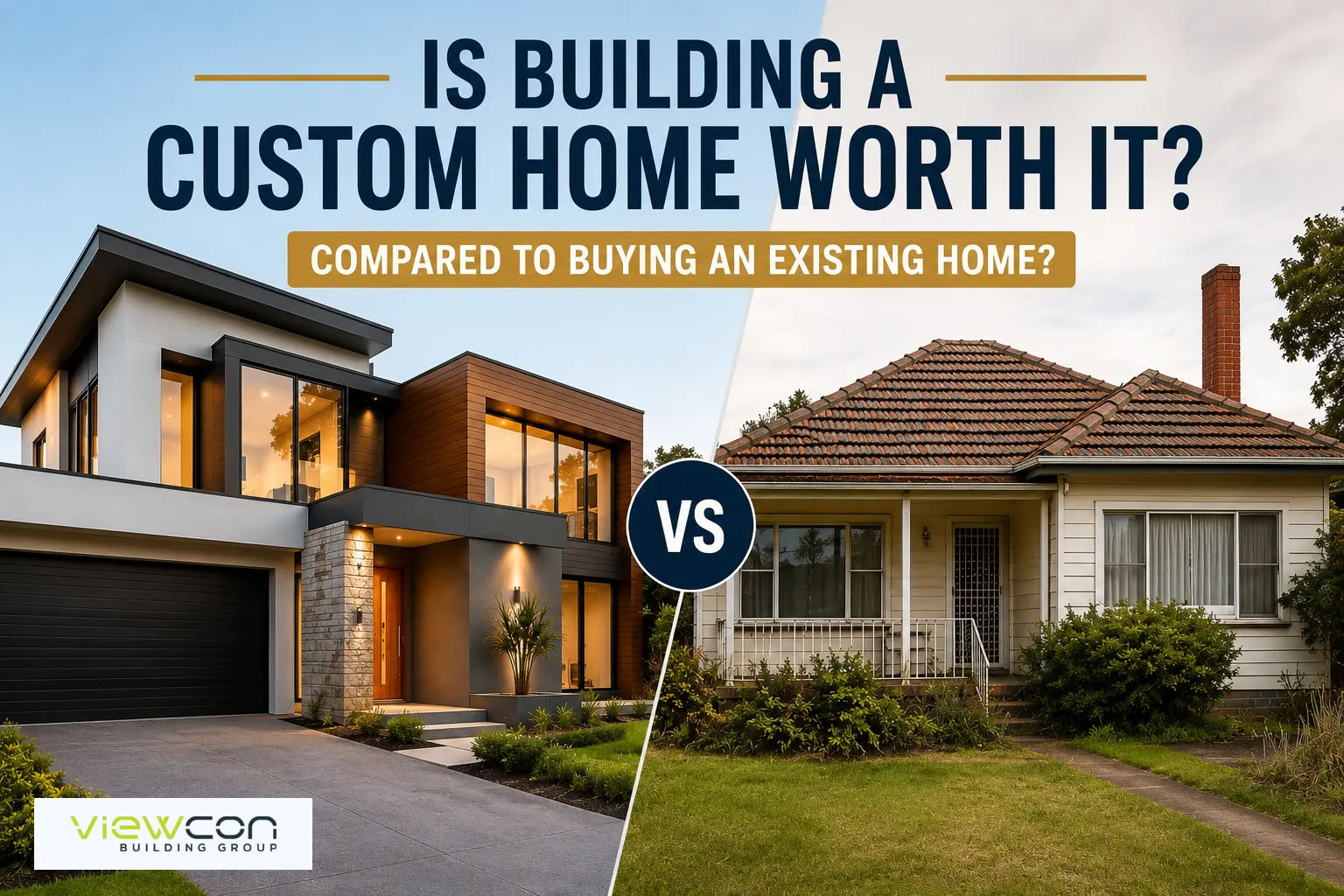
For a growing number of Australians, the honest answer is yes, and here’s why that shift is happening.
Australian homeowners are increasingly prioritizing comfort, sustainability, and long-term value rather than settling for cookie-cutter designs. Families are seeking homes that adapt to changing circumstances, whether it’s adult children staying longer, parents moving in, or families needing dedicated work-from-home zones.
A custom build lets you address all of that from the ground up. Need a double garage, a home office, and a north-facing deck to catch the winter sun? You plan it from day one. That kind of intentional design is nearly impossible to achieve when you’re buying someone else’s floor plan and retrofitting your life into it.
When you build a custom home, you get to think about the environment and how to save energy from the beginning. You do not have to try to fix a home to make it better for the earth. You can use environmentally friendly technologies and materials when building your custom home. You can also use design ideas that help the earth from the start of your custom home build. This way, you can make your custom home a special place that is beneficial for the environment and saves energy.
Think passive solar orientation, high-performance insulation, double glazing, and solar-ready roofing. Early adopters of advanced thermal materials report energy savings of 15–25% compared to conventional construction. Over 20 years, those savings add up considerably, and they make your home a far more comfortable place to live day to day.
One of the often-overlooked benefits of building a custom home is the peace of mind that comes with knowing every nail, beam, and pipe is brand new. There’s no guessing about what’s hiding inside the walls, no nasty surprises six months after moving in, and no pre-existing problems you unknowingly bought along with the property. Everything is built to current Australian standards, and most reputable builders offer structural warranties to back their work.
If you’re seriously considering this path, it’s worth connecting with experienced professionals early. A trusted custom home builder can walk you through what’s realistic for your block, your budget, and your lifestyle and help you sidestep the costly mistakes that first-time builders tend to make.
The concept of purchasing a pre-existing home appeals to me greatly. You can tour the house, envision living there, and move in quickly. When you buy a house in a neighborhood, you usually gain access to use the schools, buses, and stores that are already there.
Older houses in older neighborhoods can be lovely, but they often have hidden issues. The house might need pipes or a new heating system. You might have to fix the inside of the house. Such renovations can make the house costly, especially because materials like wood and nails are costly right now.
And that’s before you factor in stamp duty, pest inspections, and the very real possibility that the floor plan you’ve inherited simply doesn’t suit the way your family actually lives. Knocking down walls and reconfiguring spaces after purchase is expensive, disruptive, and rarely ends up as polished as something designed from scratch.
Building custom takes time, typically 8 to 14 months from design to handover, and sometimes longer depending on council approvals and material lead times. During that period, you’re most likely renting elsewhere, which adds to your overall outgoings. You’ll also need to make many decisions along the way, and without the right builder beside you, that process can become stressful quickly. That’s why the team you choose matters just as much as the design itself.
There’s no one-size-fits-all answer here. If you need to move quickly or you’ve found an established home in the right location at the right price, buying may well make sense. But if you’re planning to build a home that genuinely fits your lifestyle, is built to modern standards, and delivers real long-term value, then is building a custom home worth it? For most Australians who plan properly and partner with the right builder, the answer is a resounding yes.
The benefits of building a custom home, from complete design freedom and built-in energy efficiency to new warranties and far lower maintenance expenses, are real and meaningful. Building new is becoming the smarter long-term choice for more Australian families each year, especially in a market where established homes are increasingly expensive and often require work before they are move-in ready.
If you’re still asking yourself “Is building a custom home worth it?”, the best way to find out is to speak with an experienced custom home builder. At Viewcon Building Group, we help Australian families design and build homes that match their lifestyle, budget, and long-term goals. Whether you’re comparing the costs of building versus buying or you’re ready to start planning your dream home, our team is here to guide you every step of the way.
Contact Viewcon Building Group today for a free consultation and discover the benefits of building a custom home that’s designed around you.
Building a custom home can be worth it if you want a property designed specifically for your lifestyle, preferences, and future needs. Unlike existing homes, custom builds allow you to choose the floor plan, materials, energy-efficient features, and finishes from the beginning. While the upfront process may take longer, homeowners often benefit from lower maintenance costs, better functionality, and improved energy performance. Buying an existing home may be faster, but it can come with renovation expenses and limitations that may not align with your long-term goals.
The answer depends on location, land prices, construction costs, and the condition of existing homes in the market. Buying an existing house may appear less expensive initially, but renovation, maintenance, and repair costs can quickly add up. Building a custom home often involves higher upfront expenses, but you gain a brand-new property built to modern standards. Over time, energy savings, reduced maintenance, and improved efficiency can make a custom home a more cost-effective investment for many Australian homeowners.
The biggest benefits include design flexibility, energy efficiency, personalization, and long-term value. Homeowners can create a layout that suits their family's needs, select quality materials, and incorporate sustainable features from the start. Custom homes are also built to current building codes and standards, reducing the likelihood of major repairs. Additionally, everything is brand new, which provides peace of mind and can significantly lower maintenance expenses compared to older properties that may require ongoing upgrades.
Most custom homes take between eight and fourteen months to complete, depending on design complexity, council approvals, weather conditions, and material availability. The process typically includes planning, design, permits, construction, and final handover. Larger or more complex projects may take longer. Although building requires patience, homeowners benefit from having a property tailored to their needs. Working with an experienced builder can help streamline the process, reduce delays, and ensure the project stays on schedule as much as possible.
Yes, custom homes are generally more energy-efficient because they can be designed using modern construction methods and sustainable technologies. Homeowners can include features such as double-glazed windows, quality insulation, passive solar design, energy-efficient appliances, and solar-ready roofing. Many older homes were built before current energy standards existed and may require costly upgrades. A well-designed custom home can reduce electricity consumption, improve indoor comfort, and deliver long-term savings on utility bills while minimizing environmental impact.
The primary disadvantages include longer waiting periods, higher initial costs, and the need to make numerous design and construction decisions throughout the project. Homeowners may also need temporary accommodation while construction is underway. Unexpected factors such as approval delays or material shortages can impact timelines. However, many people find that these challenges are outweighed by the benefits of owning a home designed specifically for their lifestyle, preferences, and future plans.
When purchasing an existing property, buyers may face expenses beyond the purchase price. These can include stamp duty, building and pest inspections, repairs, renovations, plumbing upgrades, electrical work, roofing issues, and ongoing maintenance. Older homes may also require energy-efficiency improvements to reduce utility costs. In some cases, homeowners spend significant amounts modifying layouts to better suit their needs. Understanding these potential expenses is important when comparing the true cost of buying versus building.
In most cases, yes. Custom homes provide extensive flexibility in choosing floor plans, room sizes, exterior designs, materials, finishes, fixtures, and energy-efficient features. Homeowners can create spaces that reflect their lifestyle and priorities, whether they need a home office, entertainment area, additional storage, or future accessibility features. The level of customization may vary depending on budget and local regulations, but custom building offers significantly more control compared to purchasing an existing property.
A well-designed custom home can offer strong resale value, particularly when it incorporates modern layouts, quality construction, and energy-efficient features that appeal to future buyers. Homes built to current standards often require less maintenance and may attract buyers seeking move-in-ready properties. However, resale value also depends on factors such as location, market conditions, and design choices. Focusing on practical, functional features rather than highly niche preferences can help maximize future market appeal.
The decision depends on your budget, timeline, location preferences, and long-term goals. If you need to move quickly or want an established neighborhood, buying may be the better option. If you value personalization, energy efficiency, and creating a home tailored to your lifestyle, building may provide greater long-term satisfaction. Comparing costs, considering future maintenance requirements, and evaluating your family's needs can help determine which option offers the best overall value for your situation.

Talha Lone is a Digital Marketing and Business Growth Professional with experience supporting brands in building a stronger online presence and achieving sustainable business growth. His expertise spans digital strategy, paid advertising, SEO, content marketing, and lead generation. As a liaison for agencies and startups, Talha works with businesses across diverse industries to increase digital visibility, attract potential customers, and drive measurable results. With a focus on practical strategies and long-term growth, he helps brands turn digital opportunities into meaningful business outcomes.